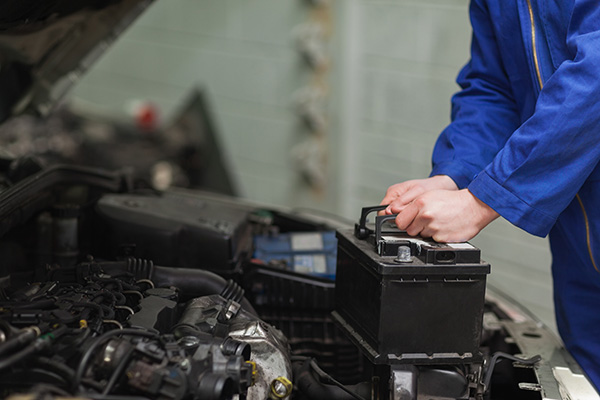
A dead battery once is annoying. A dead battery starting twice feels suspicious. By the third jump start, most drivers are done blaming cold weather, an old battery, or one forgotten dome light.
Something is draining power, failing to replace it, or blocking it from moving through the system.
The battery gets most of the attention because it is the part that leaves you stuck. But the alternator, cables, terminals, grounds, belt, and electrical draws can all be part of the same problem.
The Battery Starts The Car
The battery’s main job is to provide the power needed to crank the engine and wake up the vehicle’s electrical systems. When it is weak, the engine may crank slowly, click, or refuse to start.
A weak battery can still power lights, unlock doors, and run the radio. Those small loads do not prove the battery has enough strength for the starter. Starting the engine takes much more power.
Battery age, heat, cold, short trips, and repeated jump starts all reduce battery life. A battery test under load gives a better answer than looking at the dashboard lights and assuming the battery is fine.
The Alternator Recharges The Battery
Once the engine is running, the alternator takes over much of the electrical work. It powers the vehicle’s systems and recharges the battery after startup.
If the alternator is weak, the battery may not get fully recharged while you drive. The car may start fine after being charged or jumped, then act dead again the next morning or after a short trip.
A failing alternator can also cause dim headlights, flickering dashboard lights, weak power windows, a battery warning light, or multiple warning lights at once. If the vehicle starts with a jump but dies again later, the charging system needs to be checked before another battery is installed.
Bad Connections Can Act Like A Bad Battery
Corroded terminals, loose cable ends, damaged wires, or poor grounds can keep power from moving cleanly. The battery may be charged, but the starter and electrical system may not receive that power properly.
White, blue, or green buildup around the terminals is a common clue. A cable can also look fine from the outside while corrosion has traveled inside the insulation. Loose grounds can cause intermittent electrical behavior.
One of our technicians checks the battery connections, ground points, cable condition, and voltage drop through the system. A poor connection can make a good battery and alternator look worse than they are.
A Worn Belt Can Affect Charging
The alternator usually depends on the serpentine belt to spin. If the belt is loose, cracked, glazed, contaminated with oil, or the tensioner is weak, the alternator may not turn correctly.
A slipping belt can cause charging problems that show up only under certain conditions. You may hear squealing at startup, see the battery light flicker, or notice electrical symptoms when the A/C, headlights, or defroster are on.
The belt and tensioner are easy to overlook when a battery complaint arises, but they are part of the charging system. If the alternator cannot spin properly, it cannot do its job properly.
Something May Be Draining The Battery While Parked
If the battery and alternator test well, the vehicle may have a parasitic draw. That means something is using power when the car is supposed to be off.
Common causes include glove box lights, trunk lights, stuck relays, aftermarket electronics, module issues, alarms, chargers, or components that fail to go to sleep after the vehicle is parked.
These problems can be frustrating because the car may behave normally during the day, then have a dead battery after sitting overnight. An inspection can measure draw and help find which circuit is staying awake.
Short Trips Can Make The Problem Worse
Short trips can weaken the battery over time because the alternator may not have enough time to replace the power used during startup. A vehicle used mostly for quick errands can slowly fall behind, especially in cold weather or when many accessories are running.
That does not mean short trips are the only cause. They simply make a weak battery, a poor connection, or a tired alternator show up sooner.
Regular maintenance can help catch a battery that is losing strength, a belt that is wearing, or corrosion that is starting to build before the vehicle leaves you waiting for a jump.
Testing The Whole System Saves Money
Replacing the battery without checking the alternator can be a waste of money. Replacing the alternator without checking the battery, belt, and cables can do the same. Starting and charging problems overlap too much to rely on one symptom.
A proper test checks battery health, cranking voltage, alternator output, belt condition, terminal condition, grounds, cable resistance, and possible electrical draw. That gives a clearer repair path.
The best answer is not always the most expensive part. Sometimes the cause is a weak battery. Sometimes it is the alternator. Sometimes it is a dirty connection or a draw hiding after the car is shut off.
Get Alternator And Electrical Service In Warwick, RI, With Elite Auto Repair
If your vehicle keeps needing jump starts, has a battery warning light, cranks slowly, or keeps draining the battery, Elite Auto Repair in Warwick, RI, can test the battery, alternator, cables, grounds, belt, and related electrical systems.
Schedule a visit and find out why the battery keeps dying before the problem leaves you stuck again.